
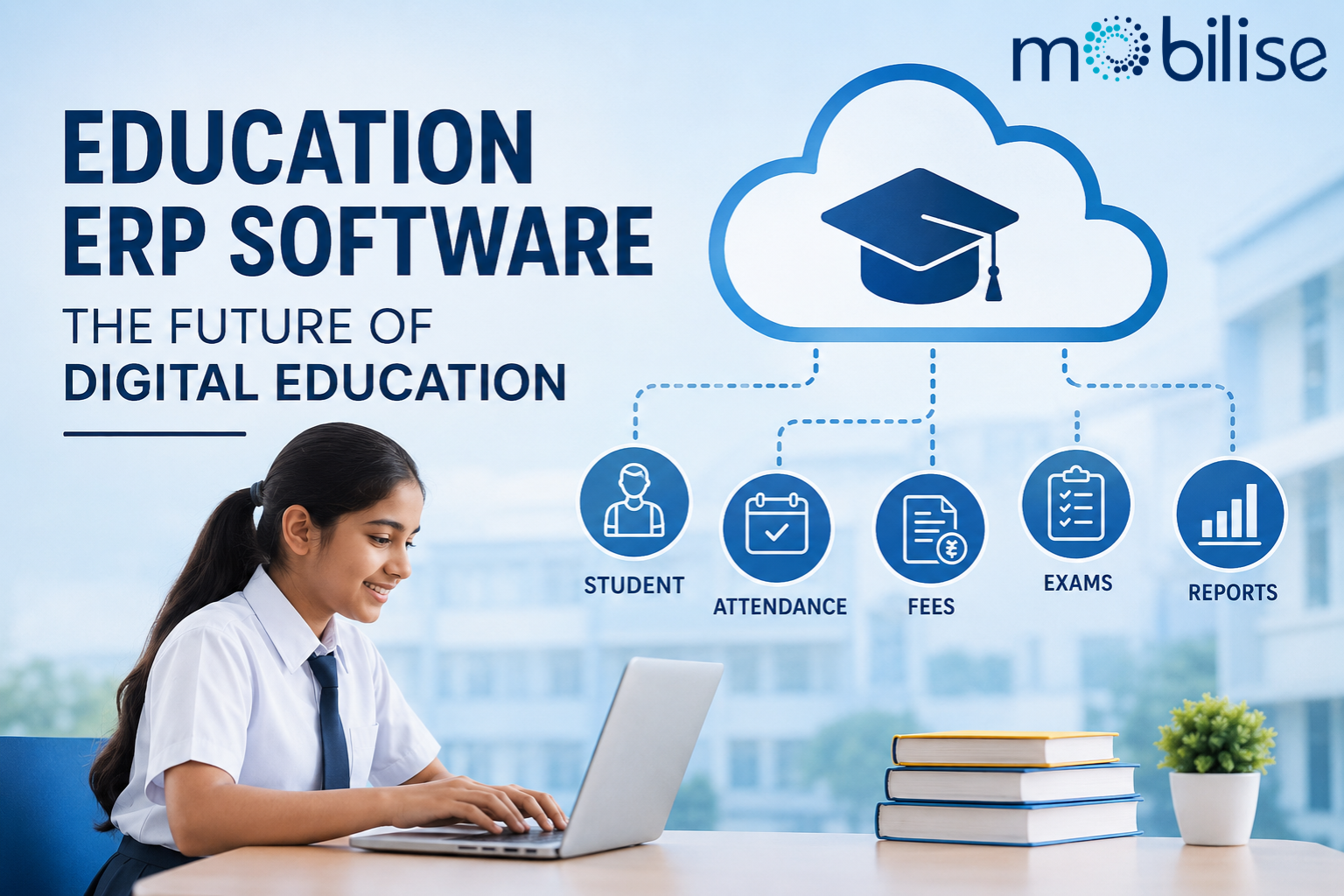
A few years ago, most schools were still running on scattered spreadsheets, WhatsApp groups, printed circulars, and outdated processes instead of using proper Education ERP Software. In most cases, one exhausted admin person was trying to hold everything together manually.
Now? Things are changing fast.
Not because schools suddenly became “tech companies.” They didn’t. The real reason is simpler — managing education manually has become messy, expensive, and honestly, unsustainable. Admissions are growing. Parent expectations are higher. Hybrid learning is normal now. Teachers are overloaded with admin work that has nothing to do with teaching.
That’s where cloud-based Education ERP Software started making real sense.
And not the overcomplicated kind that needs six months of training before anyone can even mark attendance.
Schools today want systems that actually reduce daily friction.
That’s why platforms like EduPro by Mobilise App Lab Ltd are getting attention from institutions trying to modernize operations without turning the campus into an IT department.
Schools Don’t Have an “Information Problem.” They Have a Coordination Problem.
This is something people outside education often miss.
Most schools already have the data.
Student records exist. Fee data exists. Attendance exists. Exam reports exist. Communication channels exist too — usually too many of them.
The issue is that none of these systems talk to each other properly.
So what happens?
- Accounts teams chase parents manually for fees.
- Teachers update attendance in multiple places.
- Administrators spend hours generating reports before inspections.
- Parents complain they “weren’t informed.”
- Principals operate with incomplete information most of the time.
A proper School Management System fixes coordination first.
That’s the real value.
Not dashboards. Not fancy analytics screens nobody opens after week one.
Just smoother operations.
Why Cloud-Based ERP Is Becoming the Default
Earlier school software was mostly installed on local computers or private servers. Which sounded secure at the time. In reality, it created new headaches.
If the system crashed, everyone waited.
If data backups failed, panic started.
If schools expanded to multiple campuses, syncing information became painful.
Cloud-based Education Management Systems changed that entire setup quietly.
Now administrators can access reports from home. Teachers can upload marks remotely. Parents get updates instantly. Management teams can monitor multiple branches without physically visiting each one every day.
And updates happen automatically. That part alone saves schools a surprising amount of operational stress.
Honestly, most institutions don’t care whether the software is “cloud-native architecture” or whatever technical phrase vendors like using.
They care whether fee receipts generate correctly before Monday morning.
The Parent Expectation Shift Is Real
Parents today expect school communication to work like banking apps.
Immediate notifications. Real-time updates. Digital payments. Transparent records.
If schools still rely only on printed notices sent through students, things break quickly.
Half the notices never reach home anyway.
Modern ERP Software for schools bridges that communication gap properly.
Attendance alerts. Homework updates. Fee reminders. Exam schedules. Transport tracking.
Parents stop calling the front desk for every small update because the information is already accessible.
That reduces chaos internally more than schools initially expect.
One admin manager from a mid-sized private school once described it perfectly:
“The software didn’t reduce work. It reduced confusion.”
That’s a more accurate way to describe successful ERP implementation.
Teachers Need Less Admin Work, Not More Technology
This part matters a lot.
Many schools fail with software adoption because they unknowingly add extra steps for teachers.
Teachers already manage lesson plans, student behavior, assessments, parent communication, event duties, and administrative reporting.
If an Education ERP Software makes basic tasks slower, staff resistance appears almost immediately.
Good systems stay practical.
Fast attendance marking. Simple grading workflows. Easy timetable access. Mobile-friendly interfaces.
No teacher wants to open seven tabs just to upload homework.
And honestly, when teachers actually use the system consistently, the entire institution runs better. Data becomes cleaner. Reports become accurate. Communication improves naturally.
The technology itself becomes less visible. Which is usually a sign the system is working properly.
Multi-Branch Schools Are Driving ERP Adoption Faster
Single-campus schools benefit from ERP systems.
But multi-branch institutions almost depend on them now.
Without centralized systems, every campus starts operating differently over time.
Different fee structures start appearing across campuses. Reporting styles also begin changing from branch to branch. Meanwhile, communication processes become inconsistent over time.
Management loses visibility quickly.
Cloud-based School Management Systems allow centralized oversight without constant manual follow-up.
Leadership teams can compare branch performance, monitor admissions, track pending fees, review attendance trends, and standardize operations from one place.
That operational consistency becomes incredibly important once institutions scale.
Especially for growing education groups.
Data Security Became a Bigger Discussion After Digital Learning Expanded
Once online learning became mainstream, schools started handling significantly more digital data.
Student documents. Payment records. Medical details. Academic history.
That raised new concerns.
Schools now ask practical questions before purchasing any Education ERP Software:
- Where is student data stored?
- How often are backups created?
- What happens if servers fail?
- Who has access permissions?
- Can parents access only their child’s information?
And they should ask those questions.
Because schools are no longer just educational institutions. They’re managing large amounts of sensitive operational data daily.
Reliable cloud infrastructure matters more now than flashy features.
The Future Isn’t “More Software.” It’s Better Connected Systems.
Schools are slowly moving away from isolated tools.
Instead of separate apps for fees, attendance, exams, transport, communication, and HR — institutions increasingly want unified platforms.
That’s where systems like EduPro fit naturally into modern education operations.
One connected Education Management System creates fewer reporting gaps, less duplicate work, and better visibility across departments.
And interestingly, the biggest benefit usually appears at the management level first.
Decision-making becomes faster because information stops living in disconnected silos.
Final Thoughts
Digital education isn’t just about smart classrooms or online exams anymore.
A lot of transformation is happening quietly in school operations behind the scenes.
Fee management.
Academic planning.
Communication.
Reporting.
Admissions.
Staff coordination.
That operational layer is exactly where cloud-based ERP Software for schools is making the biggest difference.
Not in a flashy “future of AI” kind of way.
Just by helping schools function with less friction every single day.
And honestly, for most institutions, that’s already a huge upgrade.


