
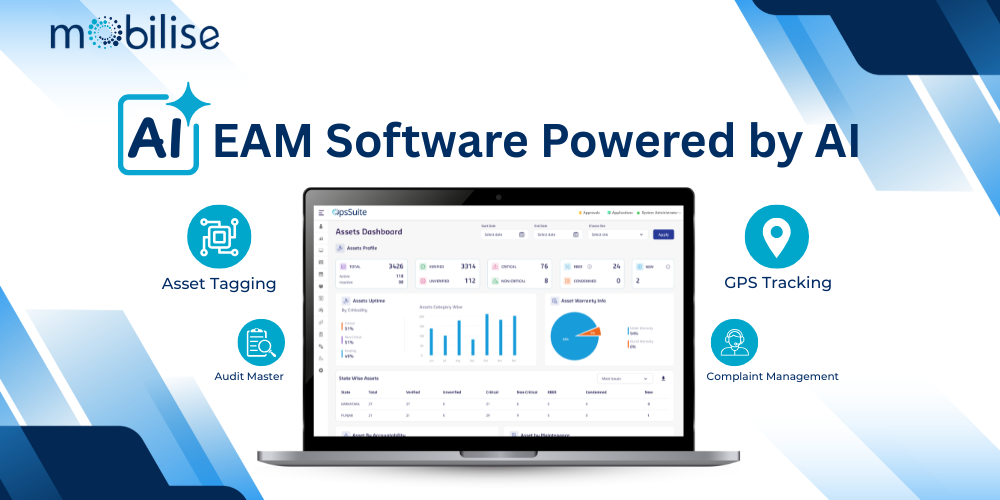
Managing physical assets efficiently has become a major challenge for modern organizations. From manufacturing equipment to infrastructure and facilities, businesses rely on complex assets that require constant monitoring, maintenance, and optimization. This is where EAM software plays a crucial role in helping organizations track, maintain, and manage assets throughout their lifecycle.
Today, the evolution of AI-powered technologies is transforming traditional asset management systems. EAM software powered by AI enables companies to predict equipment failures, automate maintenance scheduling, and gain deeper insights from operational data. As a result, businesses can reduce downtime, extend asset lifespan, and improve overall operational efficiency.
What is EAM Software?
EAM software (Enterprise Asset Management software) is a digital solution used by organizations to manage, monitor, and maintain physical assets throughout their entire lifecycle. These assets can include machinery, equipment, vehicles, infrastructure, and facilities that are essential for daily operations.
The main purpose of EAM software is to help businesses track asset performance, schedule maintenance activities, and optimize asset utilization. By centralizing asset data in one system, companies can improve maintenance planning, reduce equipment downtime, and extend the lifespan of critical assets.
Modern EAM software platforms also integrate advanced technologies such as artificial intelligence, Internet of Things (IoT), and data analytics. These technologies allow organizations to detect potential equipment failures early and implement predictive maintenance strategies instead of relying only on reactive repairs.
EAM Meaning in Asset Management
The EAM meaning refers to the process of managing an organization’s physical assets in the most efficient and cost-effective way. Enterprise Asset Management focuses on improving asset reliability, performance, and availability while minimizing maintenance costs and operational risks.
EAM Full Form Explained
The EAM full form is Enterprise Asset Management. It represents a structured approach to managing assets across their entire lifecycle. With the help of EAM software, organizations can monitor asset health, track maintenance history, manage spare parts inventory, and ensure compliance with industry regulations.
How EAM Software Works
EAM software works by collecting and organizing all asset-related information in a centralized system. It helps organizations monitor equipment performance, plan maintenance activities, and track asset history from installation to retirement. By using a single platform, companies can easily manage complex assets and improve overall operational efficiency.
Most modern EAM software solutions integrate technologies like artificial intelligence, IoT sensors, and advanced analytics. These technologies allow businesses to monitor asset conditions in real time and predict potential failures before they occur. As a result, companies can move from reactive maintenance to a more proactive and predictive maintenance strategy.
Additionally, many organizations use CMMS EAM software to streamline maintenance operations, manage work orders, and control spare parts inventory. This combination helps maintenance teams reduce downtime, optimize asset performance, and ensure smooth daily operations.
Asset Lifecycle Management
One of the core functions of Enterprise Asset Management software is managing the entire lifecycle of an asset. This includes planning, procurement, installation, maintenance, and eventual replacement. By tracking each stage of the asset lifecycle, organizations can make better decisions about repairs, upgrades, and investments.
Maintenance Planning and Scheduling
Maintenance planning is another key feature of EAM software. The system allows maintenance teams to schedule preventive maintenance tasks based on time, usage, or asset condition. This helps prevent unexpected breakdowns and keeps equipment operating at optimal performance.
Work Order Management
EAM software simplifies work order management by allowing maintenance teams to create, assign, and track maintenance tasks from a single dashboard. Technicians can access detailed information about the asset, maintenance history, and repair instructions, which improves productivity and response time.
Inventory and Spare Parts Management
Managing spare parts efficiently is essential for effective maintenance operations. Enterprise Asset Management software helps organizations track inventory levels, monitor spare parts usage, and automate reordering processes. This ensures that critical components are always available when needed, reducing delays in maintenance work.
Role of Artificial Intelligence in EAM Software
Artificial intelligence is transforming how organizations use Enterprise Asset Management software to manage assets and maintenance operations. Traditional asset management systems rely mainly on historical data and scheduled maintenance. However, when AI is integrated into EAM software, businesses can analyze large volumes of operational data in real time and make smarter maintenance decisions.
AI-powered EAM software helps organizations identify patterns, detect potential equipment issues early, and automate many maintenance processes. Instead of waiting for equipment to fail, companies can predict problems before they happen. This approach not only improves asset reliability but also reduces maintenance costs and unexpected downtime.
In addition, AI technologies such as machine learning and predictive analytics allow Enterprise Asset Management software to continuously improve its recommendations. As more data is collected from assets and sensors, the system becomes more accurate in predicting failures and optimizing maintenance schedules.
AI-Based Predictive Maintenance
One of the most valuable applications of AI in EAM software is predictive maintenance. AI algorithms analyze equipment data, usage patterns, and historical maintenance records to identify early signs of potential failures.
With predictive maintenance, organizations can schedule repairs before equipment breaks down. This reduces costly downtime, prevents production delays, and extends the lifespan of critical assets.
Smart Asset Monitoring
AI-powered EAM software enables real-time monitoring of asset performance. By integrating with IoT sensors and connected devices, the system can continuously collect data such as temperature, vibration, pressure, and operating conditions.
If abnormal patterns are detected, the system alerts maintenance teams immediately. This proactive approach helps organizations maintain optimal equipment performance and avoid unexpected breakdowns.
Automated Maintenance Scheduling
Artificial intelligence also improves maintenance planning by automating scheduling processes. Instead of relying on fixed schedules, Enterprise Asset Management software can dynamically adjust maintenance plans based on asset condition, usage levels, and risk factors.
This ensures that maintenance activities are performed only when necessary, which reduces unnecessary service costs and improves overall maintenance efficiency.
Data-Driven Decision Making
Modern organizations rely heavily on data to make strategic decisions. AI-powered Enterprise Asset Management software uses advanced analytics to convert raw asset data into actionable insights.
Managers can use these insights to identify performance trends, optimize asset utilization, and plan long-term maintenance strategies. As a result, companies can improve operational efficiency while maintaining high asset reliability.
Key Benefits of AI-Powered EAM Software
AI-powered Enterprise Asset Management software is changing the way organizations manage assets and maintenance operations. By combining enterprise asset management with artificial intelligence, businesses can monitor equipment performance, predict failures, and automate maintenance tasks. As a result, companies gain better control over their assets while improving operational efficiency.
Reduced Equipment Downtime
Unexpected equipment failures can disrupt operations and lead to costly delays. AI-powered EAM software helps organizations detect early warning signs of asset failure through predictive analytics.
- Predicts potential failures before equipment breaks down.
- Reduces unexpected downtime across operations.
- Improves equipment reliability and availability.
- Allows maintenance teams to act before problems escalate.
Improved Asset Performance
When assets are monitored continuously, organizations can ensure they operate at optimal efficiency. EAM software powered by AI analyzes performance data to identify inefficiencies and improvement opportunities.
- Monitors asset performance in real time.
- Identifies inefficiencies in equipment usage.
- Optimizes asset utilization across operations.
- Extends the lifespan of critical assets.
Lower Maintenance Costs
Maintenance expenses can quickly increase if equipment failures occur frequently. AI-enabled EAM software helps reduce unnecessary repairs and optimize maintenance budgets.
- Enables predictive maintenance instead of reactive repairs.
- Reduces emergency maintenance costs.
- Optimizes spare parts usage and inventory management.
- Improves maintenance planning and scheduling.
Better Operational Efficiency
Efficient asset management directly impacts overall business productivity. Enterprise Asset Management software with AI capabilities automates many asset management tasks and simplifies maintenance workflows.
- Automates routine maintenance processes.
- Improves coordination between maintenance teams.
- Reduces manual data entry and administrative tasks.
- Enhances productivity across operations.
Improved Compliance and Safety
Many industries must follow strict safety and regulatory standards. AI-powered EAM software helps organizations maintain compliance and reduce operational risks.
- Tracks maintenance records and asset history.
- Ensures compliance with industry regulations.
- Improves workplace safety by detecting potential risks.
- Provides detailed reports for audits and inspections.
EAM Software vs CMMS EAM Software
Many businesses confuse EAM software with CMMS EAM software because both help manage maintenance activities and assets. However, their scope is different. EAM software focuses on managing the entire lifecycle of assets, from procurement and operation to maintenance and replacement.
On the other hand, CMMS (Computerized Maintenance Management System) mainly focuses on maintenance tasks such as work orders, preventive maintenance, and spare parts management.
Understanding the difference between EAM software and CMMS helps organizations choose the right system for their asset management needs.
EAM Software vs CMMS
| Feature | EAM Software | CMMS Software |
|---|---|---|
| Scope | Full asset lifecycle management | Maintenance management |
| Focus | Strategic asset management | Work orders & maintenance |
| Analytics | Advanced analytics and AI | Basic reporting |
| Integration | Integrates with ERP, IoT systems | Limited integrations |
| Best For | Large enterprises | Maintenance teams |
Industries Using AI-Powered EAM Software
AI-powered EAM software is widely used across asset-intensive industries to improve maintenance efficiency, reduce downtime, and optimize asset performance. By combining AI, analytics, and real-time monitoring, organizations can manage complex assets more effectively.
Industries using Enterprise Asset Management software include:
- Manufacturing
- Energy and Utilities
- Transportation and Logistics
- Healthcare
- Oil and Gas
- Facilities Management
Best EAM Software Solutions in 2026
Many organizations are adopting advanced Enterprise Asset Management software to improve asset management, maintenance planning, and operational efficiency. Modern platforms now combine AI, IoT, and analytics to provide smarter asset monitoring and predictive maintenance capabilities.
One recommended solution is OpsSuite, developed by Mobilise App Lab Limited. The platform helps businesses manage assets, work orders, preventive maintenance, and facility operations from a single system.
Recommended EAM Software
OpsSuite – by Mobilise App Lab Limited
OpsSuite is an integrated CMMS and Enterprise Asset Management software platform designed to manage enterprise assets and maintenance operations efficiently.
Key Features
- Asset and equipment management
- Preventive maintenance scheduling
- Work order management
- Inventory and spare parts tracking
- Facility and asset performance monitoring
The platform helps organizations reduce downtime, improve maintenance efficiency, and optimize asset lifecycle management through digital automation and data-driven insights.
Conclusion
EAM software helps organizations manage assets, schedule maintenance, and optimize the entire asset lifecycle. With the integration of AI, modern Enterprise Asset Management software enables predictive maintenance, real-time monitoring, and better data-driven decisions. Solutions like OpsSuite by Mobilise App Lab Limited provide advanced CMMS Enterprise Asset Management software capabilities that help businesses reduce downtime, improve operational efficiency, and achieve smarter asset management.


The integration of AI in EAM software is truly a game-changer for organizations looking to optimize asset performance and reduce unexpected downtime. It’s fascinating to see how predictive analytics can transform maintenance strategies from reactive to proactive. This shift not only improves operational efficiency but also extends the lifespan of critical assets, which is crucial for long-term cost management.